
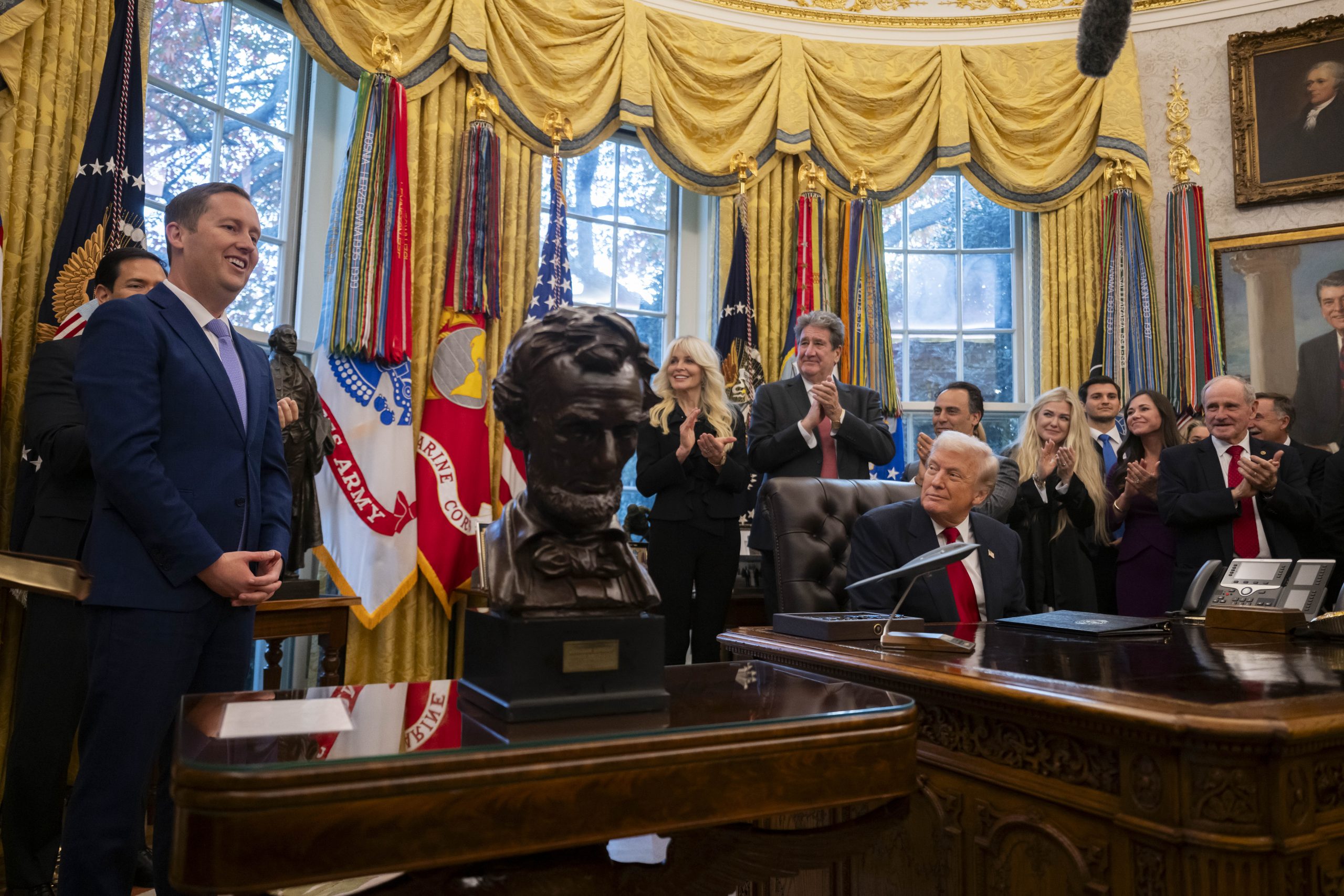
On the surface, President Donald Trump’s second-term personnel operation has been a smoothly running machine. The Senate has confirmed more than 300 civilian nominees since January, even changing the chamber’s rules to move them faster.
But there are clear signs of breakdowns behind the scenes. Trump has withdrawn a record number of nominees for a president’s first year in office as he faces a combination of GOP pushback against some picks, vetting issues, White House infighting and, in some cases, the president’s own mercurial views.
Trump has withdrawn 57 nominations, according to Senate data — roughly double the 22 nominations he withdrew during the first year of his first administration and the 29 his immediate predecessor, Joe Biden, withdrew during his first year.
The pace of withdrawals, the highest since at least the Ronald Reagan presidency, has flown below the radar in the day-to-day churn on Capitol Hill, with many Republican senators expressing surprise at the data in interviews. But they also acknowledged the obvious: In some instances, the White House just isn’t making sure Trump’s nominees can get the votes.
“It would appear that some nominees haven’t been vetted, and … somebody says, ‘Go with them anyways,’” Sen. John Kennedy (R-La.) said in an interview.
Perhaps the most vivid example was the monthslong intraparty drama over Paul Ingrassia’s nomination to lead the Office of Special Counsel.
After POLITICO reported he made racist comments in a group chat, Ingrassia withdrew despite telling senators he had “no recollection of these alleged chat leaks, and do not concede their authenticity.” But Senate Republicans had already privately telegraphed to the Trump administration for months that his nomination was in serious peril.
Asked about the withdrawals, a person close to the White House granted anonymity to speak candidly about internal dynamics pointed to Ingrassia as a key example.
“Would I say some vetting has been questionable? One thousand percent,” the person said, adding of Ingrassia: “That was a vetting nightmare that was only allowed to happen based on certain relationships and acquaintances with people that are making the decisions.”
Trump faced similar pushback from Republican senators over Ed Martin’s nomination to be the U.S. attorney in Washington. Sen. Thom Tillis (R-N.C.), a key vote on the Judiciary Committee, essentially killed Martin’s nomination after he told the White House that he couldn’t support him over his past defense of accused Capitol rioters. But even before that, Martin was on thin ice with GOP senators.
A Senate aide who was granted anonymity to speak frankly about White House personnel issues said that in several cases the nominees were being withdrawn not because of issues with GOP senators but intra-administration snags. A White House official, granted anonymity because they were not authorized to speak publicly about the withdrawals, acknowledged the presidential personnel office had recently strengthened its background checks for nominees.
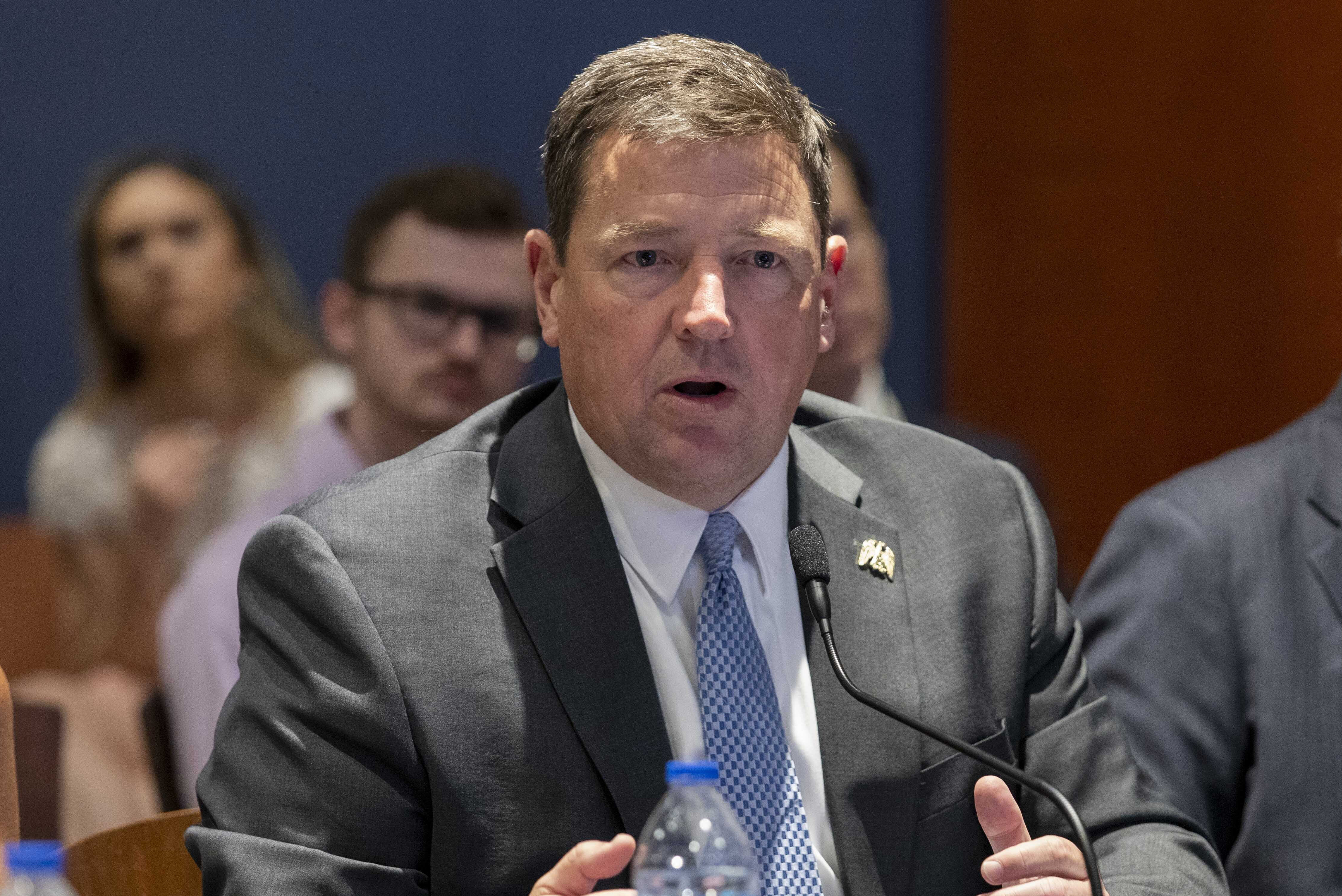
The person close to the White House said that “not all of these nominations were done so in good faith” under Sergio Gor, who served as the director of the White House Presidential Personnel Office until his confirmation as ambassador to India. The person suggested Gor’s successor as personnel chief, longtime Trump loyalist Dan Scavino, would oversee fewer withdrawals.
“I think Dan is a little bit wiser and less inclined to give out jobs like candy to people who haven’t earned them or would not pass vetting,” the person added.
Gor and the U.S. Embassy in India did not return messages seeking comment. The White House official said the 57 withdrawals, which include instances where the same nominee was put forward for multiple positions, were done “for a variety of reasons — clerical changes, new positions or adding new responsibilities to their original role.”
Frank Bisignano’s nomination for Social Security commissioner, for example, was withdrawn and immediately resubmitted to the Senate in January.
The official added that Trump is nominating new individuals at a “record pace” and noted he has gotten more nominees confirmed at this point than he did during his first term or than Biden did by this point.
Republicans were already confirming Trump nominees at a faster clip than in his first administration. But in September they enacted a party-line rules change, allowing most nominees to now be confirmed in groups of unlimited size. One group of 108 was confirmed in September; a group of 48 more followed in October.
Tillis, who described himself as surprised by the total number of nominees withdrawn, pointed to Trump’s fast pace in making nominations as one possible reason for the sloppy vetting.
“Obviously, when you move more quickly and you’ve got new folks in play, then you are going to run into people who have lifestyle issues,” Tillis said, adding that he believes only “outliers” have run into issues in the Senate.
Sen. Mike Rounds (R-S.D.), who like Tillis expressed surprise at the number of nominees withdrawn, added that “part of our responsibility is advise and consent.”
“And sometimes the advice is to maybe reconsider something,” Rounds said. “You don’t have to make a big deal out of it, but you can share that with the administration. And sometimes they take a second look at the nominee, and they say, ‘You know, yeah, you’re right.’”
Asked about the withdrawals, White House spokesperson Liz Huston said in a statement that Trump is “nominating the most talented patriots to successfully carry out his America First agenda.”
“Under President Trump’s leadership, these appointees are delivering on his core campaign promises in record time from securing the border, ending Joe Biden’s inflation crisis, unleashing American energy, and restoring common sense policies,” she added.
While Martin and Ingrassia are two high-profile examples of nominees running aground in the Senate, there have been other quieter examples — including Joel Rayburn, who had been nominated to be an assistant secretary of State but faced fierce public opposition from Sen. Rand Paul (R-Ky.).

Trump has also withdrawn nominees for his own reasons. He abruptly withdrew Rep. Elise Stefanik’s nomination to be the U.S. ambassador to the United Nations earlier this year amid concerns about how the New York Republican’s departure would trim the House majority. He later pulled Jared Isaacman’s nomination to lead NASA over his “prior associations,” only to renominate him five months later.
Late last month, he withdrew Donald Korb’s nomination as top IRS lawyer after a pressure campaign led by right-wing activist Laura Loomer. She publicly boasted that Korb had been “Loomered” after Trump’s announcement.
Others have been snagged by the blue-slip precedent, which allows home-state senators to effectively block district court and U.S. attorney nominees. For instance, Democratic Sens. Cory Booker and Andy Kim refused to return a blue slip for Alina Habba, who was nominated to be U.S. attorney for New Jersey. Trump withdrew her nomination and attempted to place her in the role as an acting U.S. attorney, which sparked a legal battle.
Trump is so far standing by other nominees subject to blue-slip objections, and he is pressuring Senate Judiciary Committee Chair Chuck Grassley to get rid of the practice altogether. Republicans did away with it for appeals court judicial nominees during Trump’s first term, but Grassley and many other GOP senators remain opposed to a wholesale elimination.
Trump told Senate Republicans last month that he ousted one official after finding out that he had been backed by Virginia’s Democratic senators. Trump recently withdrew nominations for Todd Gilbert, whom he had nominated to be U.S. attorney for the Western District of Virginia, and Erik Siebert, who had been nominated to be U.S. attorney for the Eastern District of Virginia.
“I had one Republican who got two great letters, but it turned out that he was a RINO,” Trump said during a White House breakfast with senators. “When I saw that the two senators from Virginia gave him glowing remarks … I said let me see this, I read the most beautiful letters I’ve ever seen. I called him up; I said, ‘Sorry, you’re fired — get the hell out of here.’”
Dasha Burns contributed to this report.
